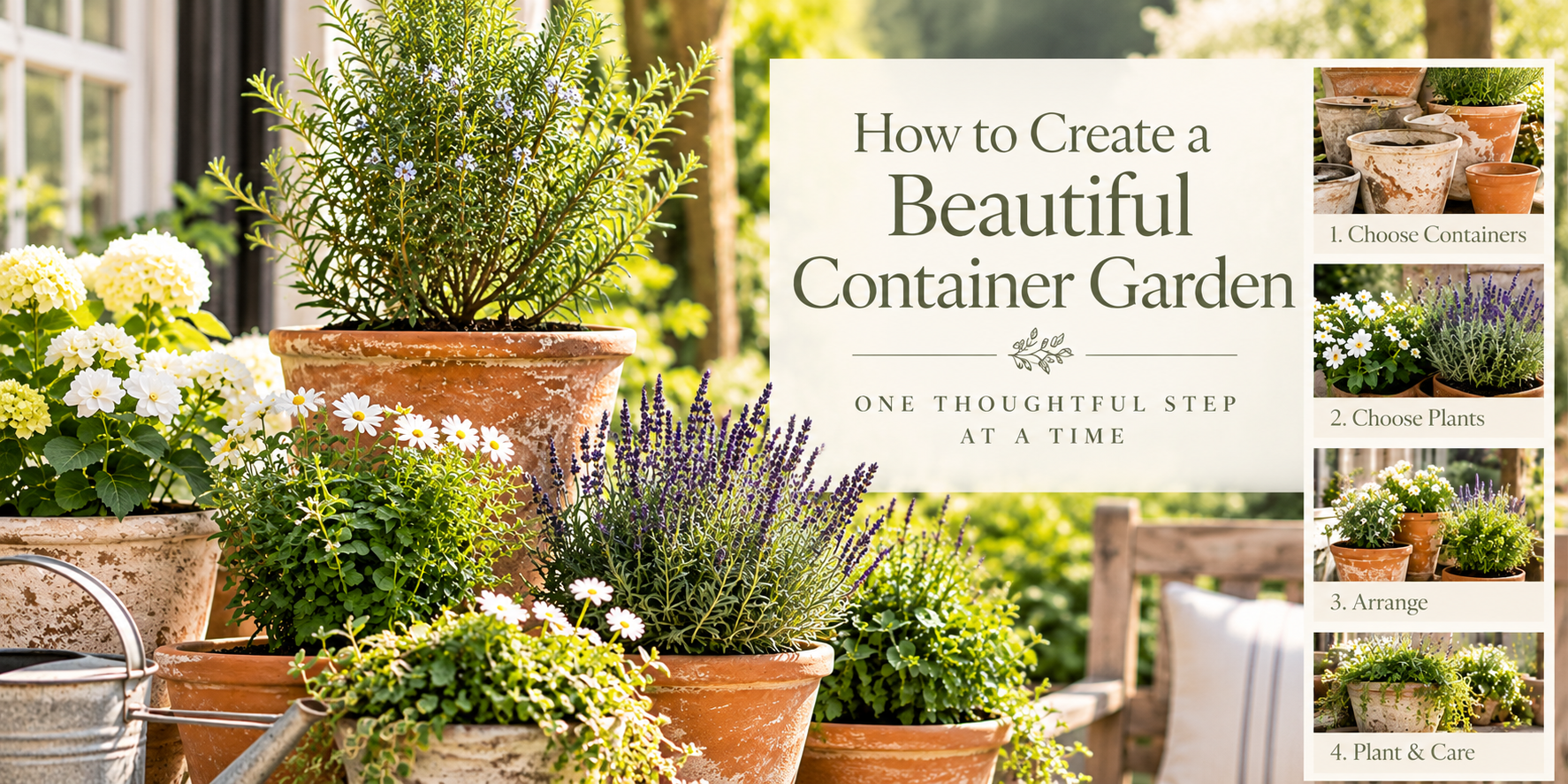
How to Create a Beautiful Container Garden: One Thoughtful Step at a Time
A beautiful garden doesn’t always require a large yard, carefully designed flower beds, or an expensive landscape plan.
Sometimes, all it takes is a collection of thoughtfully chosen containers, a few favorite plants, and a welcoming corner to bring everything together.
Container gardens are one of the simplest ways to add color, texture, and personality to a porch, patio, garden path, or even a small courtyard.
And the best part? You can begin with what you already have.
Whether you’re working with weathered terracotta pots, an old wooden planter, or a collection of containers gathered over the years, creating a beautiful arrangement is easier than you might think.
Let’s walk through it, one thoughtful step at a time.
Step 1: Choose Your Containers
The containers you choose are just as important to the appearance of your garden as the plants themselves.
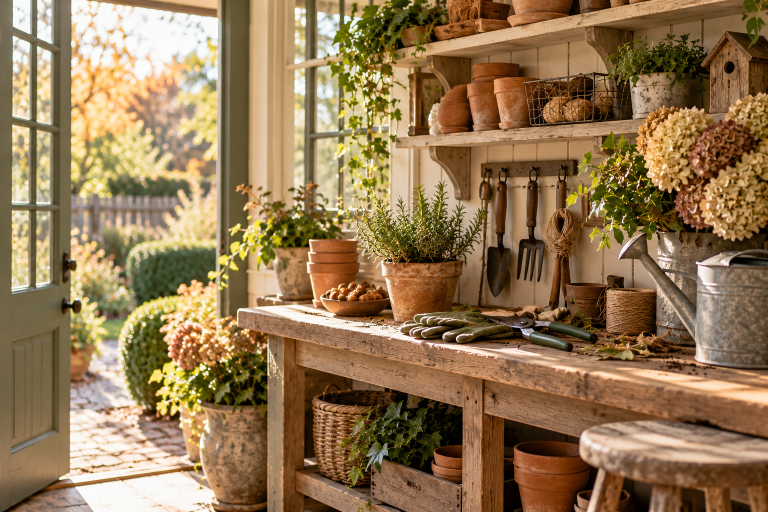
You don’t need a matching set of expensive planters. In fact, a collection of weathered terracotta pots, simple ceramic containers, and well-loved wooden planters often creates a more interesting arrangement.
Begin by gathering the containers you already own. Look for a variety of sizes and shapes, but try to keep a common element, such as natural materials or similar colors, to give the grouping a cohesive appearance.
A few things to consider:
- Drainage: Choose containers with drainage holes so excess water can escape. Most garden plants will struggle in pots that hold standing water.
- Size: Select pots large enough to accommodate the plants’ root systems and allow room for growth.
- Material: Terracotta offers a timeless appearance but dries out more quickly than many glazed or plastic containers.
- Proportion: Combine taller, medium, and smaller pots to create a pleasing arrangement without making everything look too uniform.
Before planting, arrange your empty containers where you intend to use them. Move them around until the grouping feels balanced and inviting.
Sometimes, simply changing the placement of pots you already own is enough to transform a forgotten corner.
Step 2: Choose Plants That Grow Well Together
One of the secrets to a beautiful container garden is combining plants that complement one another in height, color, and texture.
But before choosing plants for their appearance, consider the growing conditions where your containers will be placed.
A sunny patio may be perfect for rosemary, lavender, and sun-loving flowers, while a shaded porch might be better suited to ferns, begonias, and other shade-tolerant plants.
Begin with three simple elements:
- Height: Choose an upright plant to give your arrangement structure. Ornamental grasses, compact shrubs, or taller flowering plants can create a beautiful focal point.
- Fullness: Add medium-growing plants with attractive foliage or flowers to fill the center of the arrangement.
- Softness: Include a trailing plant, such as creeping Jenny or trailing petunias, to soften the edges of a container.
This combination of heights creates a layered appearance that feels abundant without becoming overcrowded.
A helpful gardening tip: When placing several plants in the same container, choose varieties with similar sunlight, soil, and watering requirements.
For example, drought-tolerant herbs such as rosemary and thyme generally prefer excellent drainage and soil that dries somewhat between waterings. Moisture-loving plants may be happier in separate containers.
And remember, you don’t need every pot to contain three different plants. A single healthy rosemary plant in an aged terracotta pot can be just as beautiful as an elaborate flowering arrangement.
The goal is to create a collection that feels natural, balanced, and easy to maintain.
Step 3: Arrange Your Containers for a Collected Look
Once you’ve chosen your containers and plants, it’s time to bring everything together.
The secret to a beautiful container garden isn’t perfect symmetry. It’s creating a grouping that feels balanced, interesting, and naturally collected.
Begin by placing your tallest container toward the back of the arrangement. Position medium-sized pots nearby, then bring smaller containers forward to create layers of height and texture.
A few simple arranging ideas:
- Work in groups: Three or five containers of varying sizes often create a pleasing arrangement.
- Vary the heights: Use an old wooden stool, a sturdy crate, or a low plant stand to give a smaller pot a little elevation.
- Repeat a color: Carry a shade of green, soft white, lavender, or another favorite color through several containers to bring the grouping together.
- Leave breathing room: Allow enough space for plants to grow and for air to circulate around their foliage.
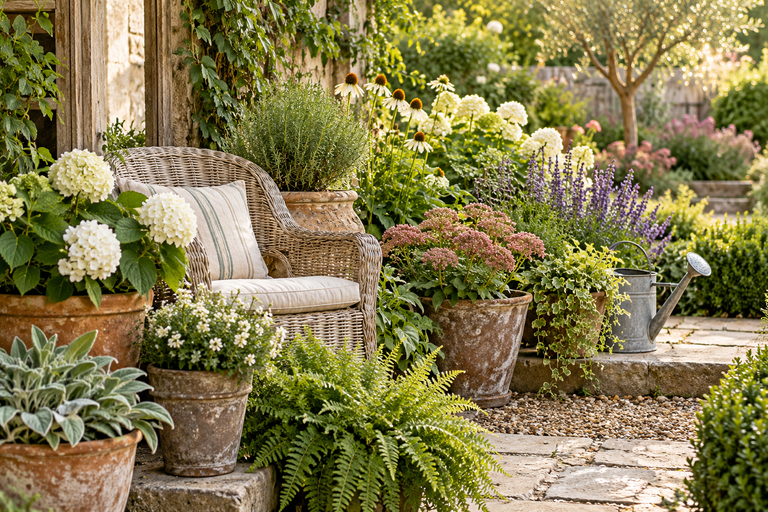
- Include something with character: A weathered watering can, a favorite garden chair, or a simple wooden bench can make the arrangement feel personal.
Stand back and look at your grouping from the direction visitors will approach it.
Does your eye move naturally from one container to the next? Does the arrangement feel welcoming without looking crowded?
Don’t be afraid to move things around. Sometimes shifting a single pot or removing one extra accessory makes the entire arrangement feel more balanced.
And remember, your containers don’t have to match. They simply need to look as though they belong together.
Step 4: Plant and Care for Your Containers
A beautiful container garden begins with healthy plants and a little thoughtful preparation.
Once you’ve arranged your pots and chosen plants suited to their location, it’s time to plant.
Follow these simple steps:
- Check the drainage. Make sure each container has an open drainage hole so excess water can escape.
- Choose a quality potting mix. Use a mix designed for containers rather than ordinary garden soil, which can become compacted in pots. Select a specialty mix when your plants require different drainage conditions.
- Position your plants. Gently remove each plant from its nursery container and loosen tightly circling roots when necessary. Place it at approximately the same soil depth at which it was previously growing.
- Fill and settle the soil. Add potting mix around the roots, gently firming it without packing it tightly. Leave a little space below the rim to make watering easier.
- Water thoroughly. After planting, water until moisture begins draining from the bottom of the container.
Keeping your garden beautiful
Container gardens need a little more attention than plants growing in the ground, particularly during hot or windy weather.
Check the soil regularly by feeling beneath the surface. Water when appropriate for the plants you’ve chosen rather than following the same schedule for every container.
Remove spent flowers when beneficial, trim damaged foliage, and watch for signs of pests or stress.
As plants grow, you may find that a container needs a little more space, a different location, or a fresh planting for the next season.
That’s part of the pleasure of container gardening. Nothing has to remain exactly as it was on the day you planted it.
With a little attention, your collection can continue growing and changing throughout the seasons.
One Thoughtful Step
You don’t need an entire collection of new planters or a car full of flowers to begin creating a beautiful container garden.
Start with one corner of your porch, patio, or garden.
Gather three containers you already own. Choose a few plants suited to the sunlight and growing conditions, and experiment with arranging them at different heights.
Perhaps an old terracotta pot needs a fresh planting, or a favorite wooden chair could become the centerpiece of a welcoming garden corner.
Give yourself permission to move things around, try something different, and enjoy the process.
A beautiful garden isn’t created by buying everything at once. It’s built through thoughtful choices, a little creativity, and the pleasure of watching things grow.
One thoughtful step at a time.
From our home to yours,
Iron & Ivy Living