Creating a Garden That Feels Collected Over Time
From the Iron & Ivy Journal
Some of the most beautiful gardens aren’t the ones that were designed and planted all at once. They’re the gardens that have grown slowly, changing with the seasons and gathering character along the way.
A favorite rose passed along by a friend, a weathered clay pot, a plant moved three times before finding just the right spot—these are the things that give a garden its story.
Creating a garden that feels collected over time isn’t about having a large space or an elaborate landscape plan. It’s about choosing plants and details thoughtfully, allowing room for change, and appreciating the beauty that develops along the way.
And like a welcoming home, a meaningful garden is never truly finished.
Begin With What You Already Have
Before buying new plants or redesigning a garden bed, take a walk through your garden and notice what’s already thriving.
Perhaps there’s an established shrub that provides beautiful structure, a perennial that returns faithfully each spring, or a favorite container that simply needs a new location.
These familiar pieces can become the foundation of a garden that feels naturally collected.
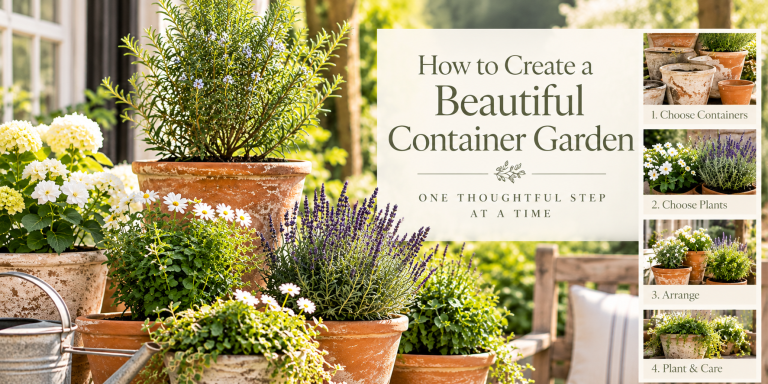
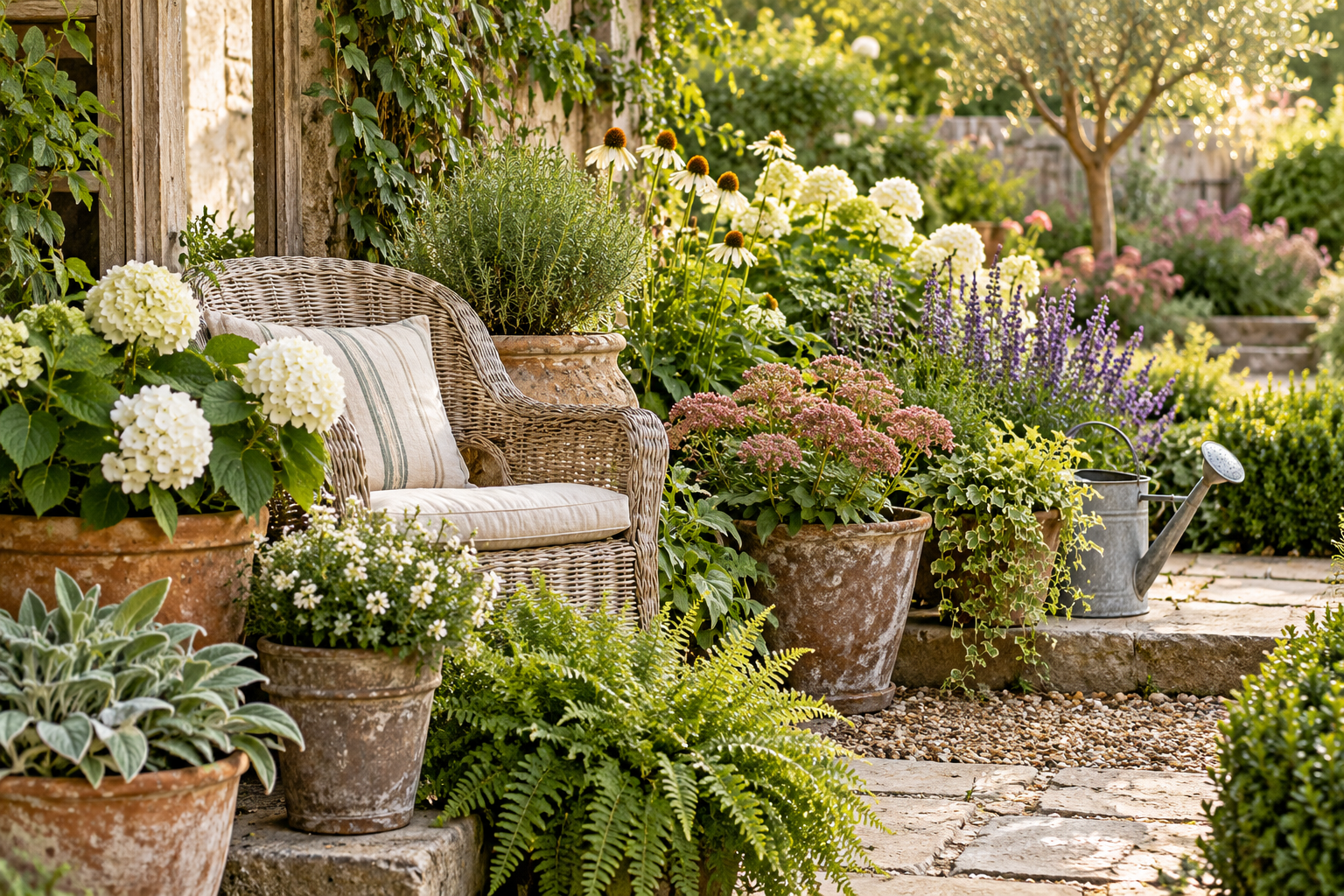
Consider moving existing plants where growing conditions allow, dividing established perennials, or grouping containers of different heights to create interest. Even a small collection of herbs in weathered terracotta pots can make an ordinary corner feel inviting.
The goal isn’t to make everything match. It’s to create a garden where each addition feels as though it belongs.
Layer Plants for a Garden That Feels Established
One of the loveliest qualities of an established garden is the way plants seem to grow together naturally.
Tall shrubs provide structure, flowering perennials bring seasonal color, and smaller plants soften the edges of pathways and garden beds.
Rather than planting everything at the same height or spacing each plant in a perfectly straight row, think about creating layers.
Begin with a few dependable plants that suit your climate and growing conditions. Add medium-height plants for fullness, then tuck lower-growing varieties along the edges.
Allow room for plants to reach their mature size. A garden that feels abundant should still have space to breathe.
And don’t overlook foliage. The different shades, shapes, and textures of leaves can make a garden beautiful even when very little is blooming.
Over time, these layers begin to create the relaxed, collected appearance that makes a garden feel as though it has always belonged.
Give Weathered Pieces a Place in the Garden
A garden becomes more interesting when it includes pieces that have a little history.
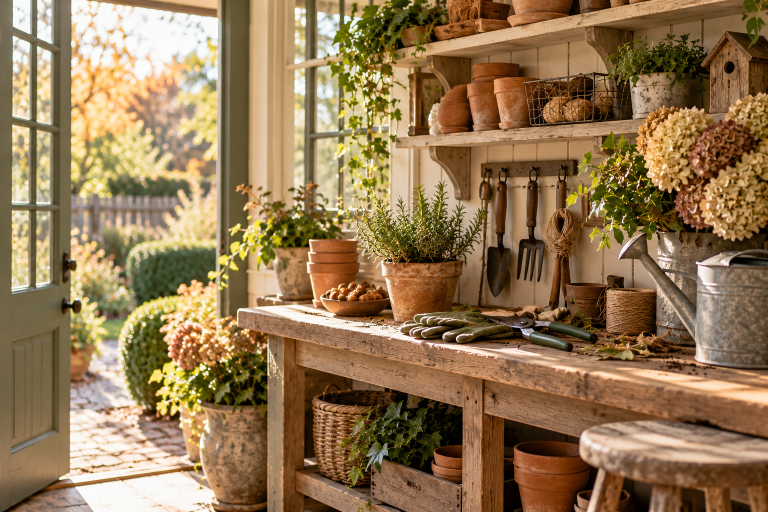
Weathered terracotta pots, an old wooden bench, a vintage watering can, or a well-loved garden tool can add warmth and character that new decorations sometimes lack.
These pieces don’t have to be expensive or rare. Often, the most meaningful garden accents are things we’ve collected over the years or found tucked away in a shed.
Try grouping several aged pots near a garden path, placing a favorite chair beneath a tree, or using an old wooden crate to display a collection of herbs.
Choose pieces that serve a purpose or hold a memory rather than filling every corner with decoration.
And remember that age can be part of the beauty. A little moss on a clay pot, softened wood, or a naturally weathered finish can make a garden feel comfortable and lived in.
The loveliest gardens often look as though they’ve been gathered together slowly, one meaningful piece at a time.
Let the Garden Change With the Seasons
A garden that feels collected over time is never exactly the same from one season to the next. That’s part of its beauty.
Spring brings fresh growth and the return of familiar perennials. Summer fills the garden with lush foliage, flowers, and the quiet pleasure of watching everything grow.
Autumn reveals a different kind of beauty through changing leaves, seed heads, ornamental grasses, and the warm colors of the season.
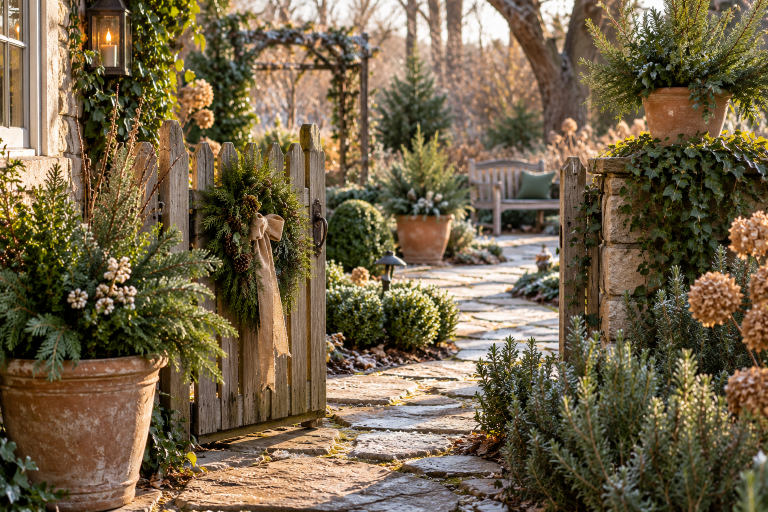
Even winter has something to offer. Evergreen shrubs, bare branches, weathered containers, and the structure of garden paths remind us that a beautiful garden is about more than flowers.
As the seasons change, notice which plants thrive, which combinations you enjoy, and where something might need to be moved or improved.
Keep a few notes or photographs throughout the year. Over time, these small observations can help you make thoughtful decisions about what to plant, divide, relocate, or leave just as it is.
A garden doesn’t have to look perfect in every season. It simply needs room to grow and change.
One Thoughtful Step
Before making plans for your next garden project, take a slow walk through the space you already have.
Notice the plants that have flourished, the corners that feel especially welcoming, and the pieces you’ve collected along the way.
Perhaps an old terracotta pot deserves a new planting, a favorite perennial could be divided, or a neglected corner simply needs a comfortable chair and a little attention.
Choose one small thing you can do this week to make your garden more beautiful, useful, or welcoming.
Then give it time.
The most meaningful gardens aren’t created in a single season. They grow through patience, observation, and the little decisions we make along the way.
One thoughtful step at a time.
From our home to yours,
Iron & Ivy Living